
- VINYL
- CD
- MC
- FILM
- K-POP
- MERCH
- Utstyr & tilbehør
- VI TIPSER
- Halloween Movies
- National Album Day
- Rocktober
- Fredagsutgivelser
- 2026-07-24
- 2026-08-07
- 2026-08-14
- 2026-08-21
- 2026-08-28
- 2026-09-04
- 2026-09-11
- 2026-09-18
- 2026-09-25
- 2026-10-02
- 2026-10-09
- 2026-10-16
- 2026-10-23
- 2026-07-10
- 2026-07-03
- 2026-06-26
- 2026-06-19
- 2026-06-12
- 2025-12-19
- 2025-12-12
- 2025-12-05
- 2025-11-28
- 2025-11-21
- 2025-11-14
- 2025-11-07
- 2025-10-31
- 2025-10-24
- 2025-10-17
- 2025-10-10
- 2025-10-03
- 2025-09-26
- 2025-09-19
- 2025-09-12
- 2025-09-05
- 2025-08-29
- 2025-08-22
- 2025-08-15
- 2025-08-08
- 2025-08-01
- 2025-07-25
- 2025-07-18
- 2025-07-11
- 2025-07-04
- Record Store Day
- Ukens Hardrock
- Game Soundtrack All Media
- Bengans Distribusjon
- Musikkkboxar
- MusikkkBøker
- Signert
- Melodifestivalen
- 200 Album Å Eie På Vinyl
- KAMPANJER
- Gavekort
- Kundeservice
- FAQ

-%
Spar
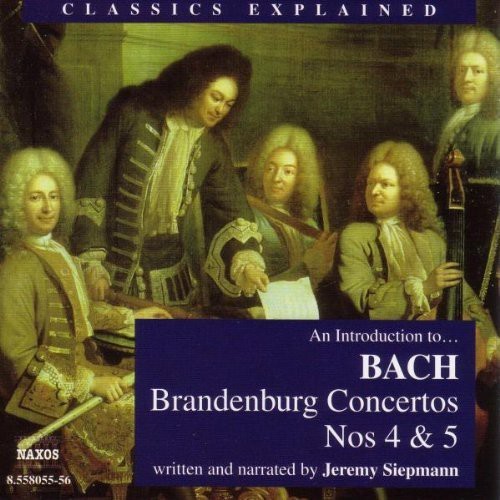
Bach Johann Sebastian - Intro To Brandenburg Concertos
CD
269 NOK
Fakta
| Artist: | Bach Johann Sebastian |
| Enheter i forpakning: | 1 st |
| Label: | Naxos |
| Lev. Art.nr.: | 855805556 |
| Media: | CD |
| Strekkode: | 0636943805527 |
| Utgivelsesdato: | 2002-09-01 |
- 1. The Brandenburgs As Concerti Grossi
- 2. Introduction: Melody, Theme and Motif; Bach's Opening Gambit
- 3. Onwards and Upwards: Motif No.2 and It's Function
- 4. The Two Elements of Motif No.2 and the Effect of Their Combination
- 5. The 'Motto' Rhythm Hidden Even Within the Opening Bar
- 6. Motif No.3, Introduced By the Two Recorders, Has a Kind of 'Hovering' Character; It's Repetition in Rising Sequences
- 7. Motif No.3, Repeated for a Second, 'Directed' Listen
- 8. Bach Reminds Us of the Opening
- 9. Motif No.4 - a Steadily Rising Derivative of Motif No.1
- 10. Motif No.5, a Lovely, Bouncy, Syncopated Flourish, in Which All the Instruments Join
- 11. Opening Ritornello (Complete)
- 12. Episode 1 Begins with Virtuoso Entry of the Solo Violin, Made Up of Alternating Arpeggios and Rising Scale-Steps
- 13. Motif No.3 Returns, Courtesy of the Recorders, Recently Sidelined By the Violin, Which Now Accompanies, with 'Motto' Motif
- 14. Ritonello 2, a Varied Repeat of Ritornello 1, Arrives After Much Harmonic Movement, This Time in E Minor
- 15. Episode 2, Part 1, Preceded By the 'Fanfare' Motif from Which It's First Them Derives
- 16. Episode 2 Continued, with More Bravura Dazzle from the Solo Violin; Key Shifts from a Minor to C Major
- 17. Repeat of Section for Purposes of Hearing the Harmonic Movement
- 18. Ritornello 3, with the Prominent Participation of the Soloists
- 19. Episode 3 Prove Retrospective, Featuring Transposed Repeats of Earlier Material
- 20. Ritornello 4, Not Altogether What It Might Seem; Solo Violin Takes 'Motto' Motif, Orchestral Violins Take Motif No.4
- 21. Episode 4. Cue to Part 1, Focusing on 'Soloistic' Counterpoint Provided By the Continuo
- 22. Return to Ritornello 4 to Hear Sources of Episode 4, Part 2
- 23. Episode 4 Continued, with Emphasis Placed on Conversational Interchanges Between Orchestral Violins and the Recorders
- 24. Return to Opening Ritornello in Order to Enhance Awareness of the Contrast Between G Major and B Minor
- 25. Ritornello 5, Beginning
- 26. Ritornello 5 Continued, with Emphasis on the Determined Banishment of B Minor
- 27. Cue to Complete Performance of First Movement
- 28. First Movement (Complete)
- 29. Introduction: Rhythmic Motif Provides Basis for Whole Movement; the Kernel from Which Much of the Movement Derives
- 30. The Melody Not Much to Write Home About; Nor Is the Meek 'Answer' Offered By the Soloists
- 31. Putting the Two Together, Thereby Establishing a Relationship
- 32. Contrast and Syncopation - Their Relationship in Opening Section
- 33. Listening from the 'Bottom Up'
- 34. The Intertwining and Alteration of Solo and Orchestra; the Irregularity of Metrical Groupings
- 35. The Next Orchestral Phrase; Slowing the Pace But Not the Tempo
- 36. The First Section (Complete)
- 37. The Next Section; Foreground Symmetry and Background Variety
- 38. The Central Section's Groupings Are Hugely Asymmetrical
- 39. Cue to Second Movement As a Whole
- 40. Second Movement (Complete)
- 41. Introduction to the Third Movement
- 42. Fugue Subject
- 43. First Counter-Subject
- 44. Second Counter-Subject
- 45. Bass Entry of the Subject
- 46. Exposition (Complete)
- 47. First Episode; the Us of Fragmentary Derivatives
- 48. The Difference a Detail Can Make!
- 49. Harmonic Rhythm Defined; Back to the Beginning to Find the Seed
- 50. ... And Now the Blossom
- 51. The First Solo Episode; a Confusion of Terms; Onwards, to the Introduction of the Solo Episode, Then to the Episode Itself
- 52. Ritornello 2 Complete
- 53. Solo Episode 2 Dominated By Thrilling Virtuosity from the Solo Violin
- 54. Ritornello 3: Highly Contrapuntal and Dominated By Subject-Derivatives, with Much Harmonic Fluidity
- 55. Ritornello 3 Continues: Engine of Harmonic Motion Repeated at Higher Pitch
- 56. More on Ritornello 3: The Use of Long, Sustained, Slightly Syncopated Notes in Upper Strings and Recorders
- 57. Ritornello 3 (Complete)
- 58. Solo Episode 3 - Less Solo Than Earlier Ones, What with (Albeit Very Discreet) Orchestral Accompaniment
- 59. The Two Recorders Converse in Canon, Accompanied for Six Exhilarating Bars By Cello 'Continuo'
- 60. Finishing Solo Exposition 3: Orchestral Cellos Introduce What Sounds Like It's Going to Be the Complete Fugue Subject But Isn't
- 61. Approaching the Final Ritornello; Stretto Explained
- 62. Cue to Final Ritornello, Noting Tension-Building 'Pedal Point' in Cellos and Double Bass
- 63. Coda - the 'Tail-Piece', with It's Surprising 'Hammer Strokes'
- 64. Cue to Third Movement
- 65. Third Movement (Complete)
- 1. Opening Music; Analysis and Phony Analysis; Shaw Quote; Music: Motif No.1
- 2. Music, Energy and Relationship
- 3. The Outlines of a Melody Emerge
- 4. The Opening Bar Again
- 5. Motif No.2: Ta/Dee-Ya, Dee-Ya, Dee-Ya
- 6. Motif No.3, and An Important Feature of It's Rhythm
- 7. Beethoven Fifth Symphony (Opening)
- 8. Motif No.4
- 9. Motif No.5
- 10. Motif No.6
- 11. Episode 1: A 'Love Duet'
- 12. Episode 1 Continued; Violin and Flute Reverse Direction of Their Theme; the 'Love Song' Motif Answered
- 13. 'False' Ritornello; Soloists Interrupt; Rising 'Sighing' Motif; Harpsichord Continues Downwards
- 14. Four Things Going on at Once, in Violin, Flute, Harpsichord Right Hand, Harpsichord Left Hand
- 15. The Orchestra Returns, Picking Up at Exactly the Spot Where It Was Interrupted
- 16. The Harpsichord Intervenes with Derivative of Motif 4; Key Shifts from a Major to B Minor
- 17. The Orchestra Returns to Foreground and Brings This Section to An End
- 18. Harpsichord Emerges As Virtuoso; a Series of Expectations Are Frustrated
- 19. A Backwards Look; Blurred Distinctions Between Soloists and Orchestra; 'Mozartian' Development
- 20. Out of the Twilight Zone; a Sequence of Surprises
- 21. The Epoch-Making Harpsichord Cadenza and the Final Ritornello
- 22. Cue to First Movement
- 23. First Movement (Complete)
- 24. Introduction; the Opening Ritornello
- 25. The First Bar; the First Main Building Block
- 26. The Flute Motif
- 27. Opening of the First Solo Episode
- 28. An Important Motif; the Second Main Building Block
- 29. The Second Main Theme
- 30. Ritornello 2; Violin and Flute As 'Orchestra'
- 31. Episode 2; Inversion of Original Motifs
- 32. More on Episode 2
- 33. Episode 1 and Episode 2 Compared
- 34. Episode 2; Key Shifts from D Major to F Sharp Minor
- 35. Ritornello 3: An Exact Transposition of Ritornello 1
- 36. Episode 3 Contrasted with Episode 1
- 37. Episode 3 Described in Detail
- 38. Rotornello 4; Second Main Theme's First Appearance in a Ritornello
- 39. Episode 4: Dominated By Inversions
- 40. Cue to Second Movement
- 41. Second Movement (Complete)
- 42. Introduction: Ritornello 1
- 43. The Fugue Subject: Close Juxtaposition of Contrasting Elements
- 44. Flute Takes the 'Answer', with Countersubject in the Violin
- 45. Contrary Motion As a Contrapuntal Device
- 46. Contrary Motion As a Listening Aid; a New Theme
- 47. Playing with the Counter-Subject; a Musical Game of Tag
- 48. Hidden Rhythms: Background Variety Behind Foreground Uniformity
- 49. Fugal Writing and the Compatibility of Parts; the Exposition
- 50. Episode 1, Taken By Soloists, Contains Importand 'Seeds'
- 51. The Orchestra Enters at Last, But By Stealth
- 52. Stretto and Musical Football
- 53. Key Changes to B Minor, Introducing Extensive Middle Section
- 54. The Middle Section a Precursor of the Mozartian 'Development'
- 55. The Fugue Subject Out in Force: First Four Immediately Consecutive Entries Yet
- 56. Ambiguity of Mode and a Scottish Twist
- 57. Middle Section Continued; Harpsichord Dominates
- 58. Cue to Last Movement
- 59. Last Movement (Complete)
Låtlist